 Beacon Shores
Recovery doesn't require putting your entire life on hold. Intensive Outpatient Programs (IOP) provide comprehensive addiction treatment while allowing you to maintain work, family, and personal responsibilities that anchor your healing journey.
Our IOP brings together evidence-based therapy, peer support, and clinical expertise in a structured format that adapts to your schedule. You'll receive the care you need to build lasting sobriety while staying connected to the life you're working to reclaim.
What IOP Addiction Treatment Involves
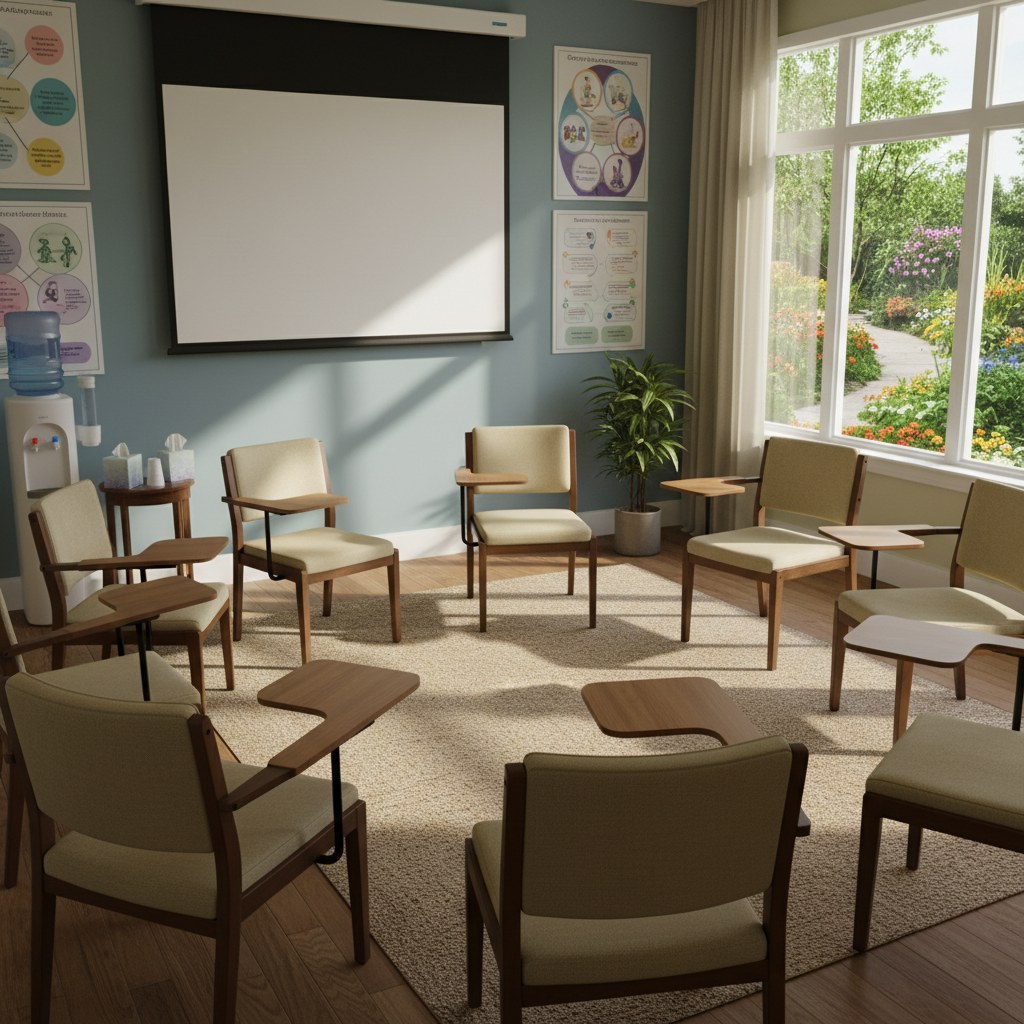
IOP serves as a bridge between residential treatment and independent recovery, typically involving 9-12 hours of programming per week spread across multiple days. You'll participate in group therapy sessions, individual counseling, family sessions, and specialized workshops focused on relapse prevention, coping skills, and the underlying issues driving addiction. Sessions occur during morning, afternoon, or evening blocks, allowing you to arrange treatment around your obligations.
The program structure creates accountability while offering flexibility. You'll work with a dedicated clinical team who monitors your progress, adjusts your treatment plan as needed, and coordinates any additional services like psychiatric care or case management. Between sessions, you return home to practice new skills in real-world settings, bringing those experiences back to group for processing and support. This approach strengthens your ability to navigate triggers and challenges in the environment where you'll actually be living your recovery.

The Benefits of IOP
Maintain Daily Responsibilities
Continue working, caring for family, and fulfilling commitments while receiving comprehensive treatment support.
Real-World Application
Practice recovery skills in your actual environment, addressing challenges as they arise rather than in isolation.
Community Connection
Build meaningful relationships with peers who understand your journey and provide ongoing encouragement.
Cost-Effective Care
Receive intensive clinical support at a fraction of residential treatment costs while avoiding disruption to income.
Seamless Transitions
Step down smoothly from higher levels of care or step up when outpatient therapy alone isn't enough.
Family Involvement
Include loved ones in your healing process through dedicated family sessions and educational programming.
Speak to a real person.
Your IOP Journey
- Clinical Assessment We conduct a thorough evaluation of your substance use history, mental health, living situation, and support system to design a personalized treatment plan that addresses your unique needs and circumstances.
- Program Engagement Attend scheduled sessions combining evidence-based therapies like CBT and DBT with peer support groups, life skills training, and specialized tracks addressing co-occurring mental health conditions.
- Progress Monitoring Your clinical team regularly reviews your advancement, celebrates milestones, addresses setbacks with compassion, and adjusts your plan to ensure you're receiving the right level of support.
- Transition Planning As you build stability and confidence, we collaboratively develop your step-down plan, connecting you with outpatient therapy, community resources, and ongoing support systems for sustained recovery.
Who IOP Is For
IOP serves individuals who need more structure than weekly therapy but don't require 24-hour supervision. You might be an excellent candidate if you've completed residential treatment and need continued support, or if you're struggling with substance use but have a stable living environment and reliable transportation. IOP works well when you're motivated to change, have some initial sobriety, and need tools to maintain recovery while managing daily life.
This level of care is appropriate when addiction is significantly impacting your functioning but you're medically stable and don't pose an immediate danger to yourself or others. It's particularly valuable for those balancing recovery with work or family obligations, individuals seeking to avoid the disruption of residential treatment, or anyone transitioning between levels of care who needs that middle ground of intensive support with real-world application.
Common questions
How does IOP differ from regular outpatient therapy?
IOP provides significantly more contact hours—typically 9-12 hours weekly compared to one hour weekly for standard outpatient care. The intensive structure includes multiple therapeutic modalities, peer support, and closer clinical monitoring while still allowing you to live at home and maintain daily responsibilities.
Can I work while attending IOP?
Yes, that's one of IOP's primary advantages. Programs offer morning, afternoon, or evening schedules specifically designed to accommodate work and family commitments. Many participants continue full-time employment while attending sessions, using IOP as their pathway to maintaining both recovery and livelihood.
How long does IOP typically last?
Most participants engage in IOP for 6-12 weeks, though duration varies based on individual progress and needs. Your clinical team continuously assesses your stability and readiness to step down to less intensive care, ensuring transitions happen when you've built sufficient skills and support systems.
What happens if I relapse during IOP?
Relapse is addressed as a learning opportunity, not a failure. Your team will assess what happened, adjust your treatment plan, and determine whether you need a brief increase in support or can continue with enhanced monitoring. The focus remains on understanding triggers and strengthening your recovery toolkit rather than punishment.